A Timeline of Tragedy and Uncertainty
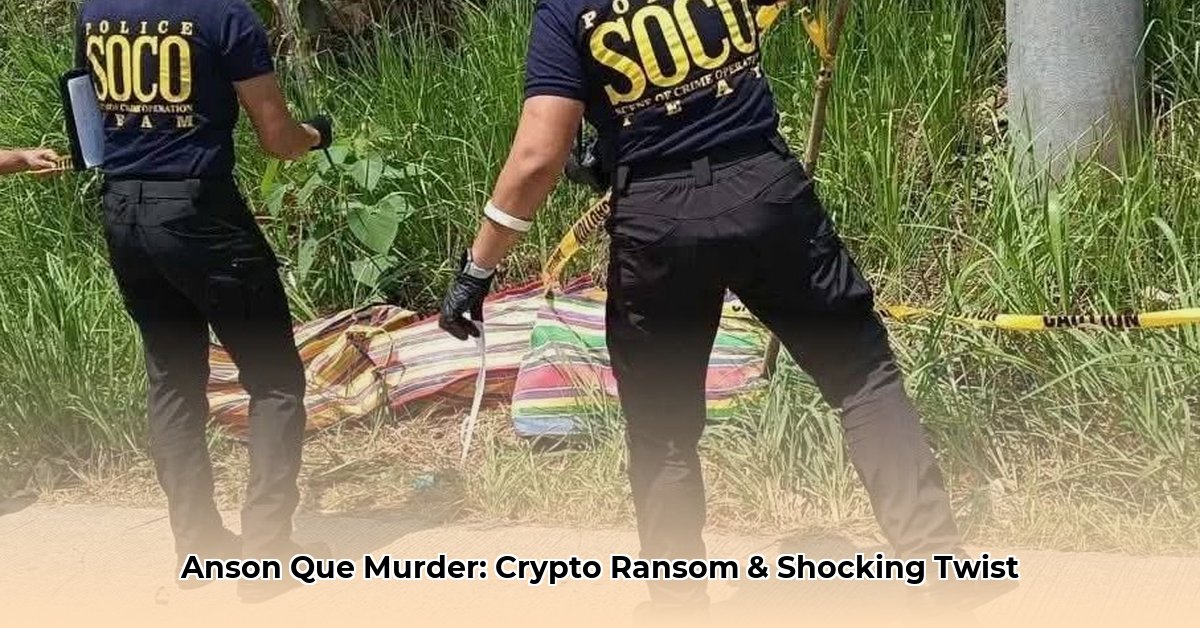
The murder of Anson Que, a prominent Filipino businessman, remains a complex and unsettling case, shrouded in questions and fueled by conflicting accounts. The investigation, marked by a significant cryptocurrency ransom and allegations against Que's own son, Alvin, continues to unfold, revealing layers of intrigue and unanswered questions. The events surrounding Que's death, starting with his kidnapping alongside his driver on March 29th, 2025, in Meycauayan, Bulacan, paint a disturbing picture. Their bodies were tragically discovered ten days later in Rodriguez, Rizal. The subsequent arrest of three individuals – David Tan Liao, Richardo Austria David, and Raymart Catequista – offered a glimmer of progress, but the ongoing search for two additional suspects, Jonin Lin and Wenli Gong, underscores the investigation's unfinished nature. For more on Anson Que's background, see his net worth here.
The initial kidnapping was swift and brutal, culminating in a demand for a substantial ransom: approximately ₱200 million (approximately $3.6 million USD), paid in cryptocurrency. This immediately introduced a significant challenge for investigators: tracing the digital currency across international borders. The untraceable nature of cryptocurrency complicates the typical methods of tracing financial flows in criminal investigations. This digital trail has proven incredibly challenging to decipher, requiring specialized skills and international cooperation.
Accusations and Counterarguments: The Role of Alvin Que
At the heart of the investigation lies the controversial accusation against Alvin Que, Anson Que's son. David Tan Liao, one of the arrested suspects, alleges Alvin masterminded his father's kidnapping and murder, driven by greed. This assertion, however, has been met with skepticism from various quarters. Groups like the Movement for the Restoration of Peace and Order cite Liao's criminal history and question the reliability of his testimony. They suggest a potential motive of self-preservation, minimizing his own sentence by implicating others. The lack of concrete evidence directly linking Alvin Que to the crime leaves the accusations hanging in a precarious balance. The question remains: Was this a simple kidnapping gone wrong, or a carefully orchestrated family betrayal?
Was this a simple kidnapping that spiraled out of control, or was it a meticulously planned family betrayal? The truth remains elusive, leaving much of the narrative open to speculation and contradictory narratives. This uncertainty underscores the complexity of the case and the challenges law enforcement faces in piecing together a definitive timeline.
The Digital Labyrinth: Investigating Cryptocurrency Transactions
The use of cryptocurrency in the ransom payment introduces another layer of complexity, transforming the investigation into a digital puzzle. Tracing the ₱200 million in cryptocurrency requires specialized expertise in blockchain analysis, a skill not readily available to all law enforcement agencies. This necessitates international collaboration, as the digital transactions likely crossed multiple borders, making traditional investigative methods inadequate. Investigators face the challenge of navigating the anonymity offered by such digital currency, a significant hurdle in unmasking the perpetrators and their financial trail.
Did the rapid use of cryptocurrency suggest a pre-existing connection between the kidnappers and the Que family? The answer to this question remains a critical piece of the puzzle.
The Ongoing Investigation: Challenges and Uncertainties
The Philippine National Police (PNP) and the Department of Justice (DOJ) are actively pursuing the investigation, meticulously analyzing forensic evidence and interviewing witnesses. However, several critical uncertainties persist: the precise roles of each suspect, the extent of Alvin Que's involvement, and the apprehension of the remaining two fugitives. These questions will define the final narrative and have far-reaching implications, setting precedents for future investigations involving cryptocurrency-related crimes. A thorough and comprehensive investigation is crucial not only for resolving this case but also for setting critical precedents for future cases involving similar complexities.
Will the remaining suspects ever be apprehended? This is a question that hangs heavy over the ongoing investigation, highlighting the challenges of pursuing criminals in the digital age.
The Broader Implications: Legal and Societal Impacts
The Anson Que case extends beyond its immediate confines, influencing legal frameworks and society's perception of criminal investigations. It highlights the urgent need for updated legislation to address the challenges posed by cryptocurrency in criminal activities. The case calls for enhanced international cooperation, strengthening the ability of law enforcement agencies to effectively track digital assets across borders. Furthermore, the public's demand for transparency and accountability underscores the significance of open communication from authorities throughout the investigative process, fostering trust and ensuring justice. The implications of this case extend far beyond the tragic loss of life; it will shape the future of how such cases are investigated and prosecuted.
How will this case reshape legislation and international cooperation in dealing with cryptocurrency-related crimes? The outcome will set precedents for years to come.